A Poem Sewn into Nature
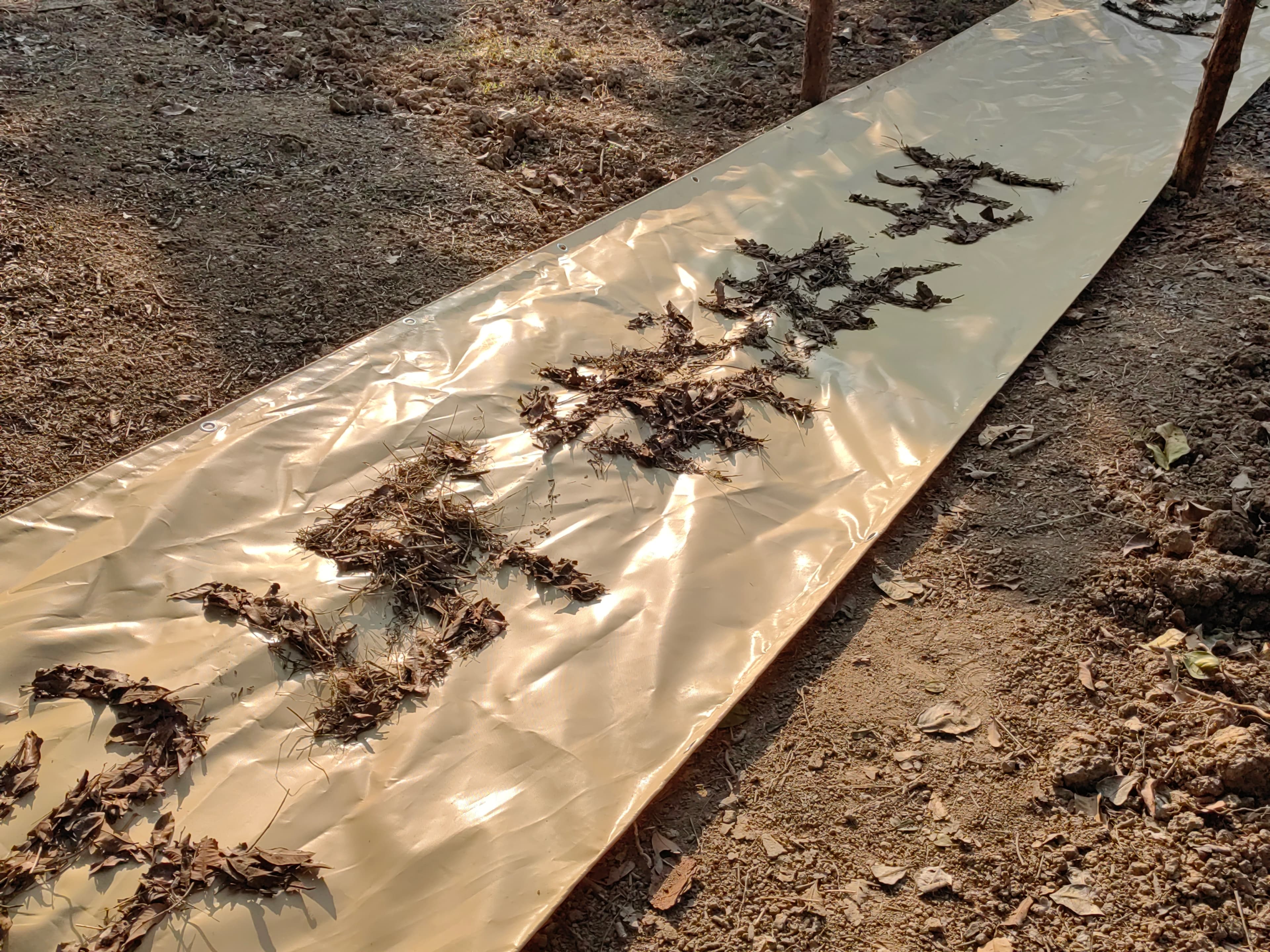
The project was grounded in the concept of harmonious coexistence between humans and nature, drawing on Zhuangzi's philosophy to explore the profound interconnectedness of life and the natural world. Set within the ecological landscape of the wetland, we used a 28-meter-long piece of fabric as a medium, stitching together natural materials with needle and thread to transform nature's gifts into an artistic language—a poem co-created by people and the earth.
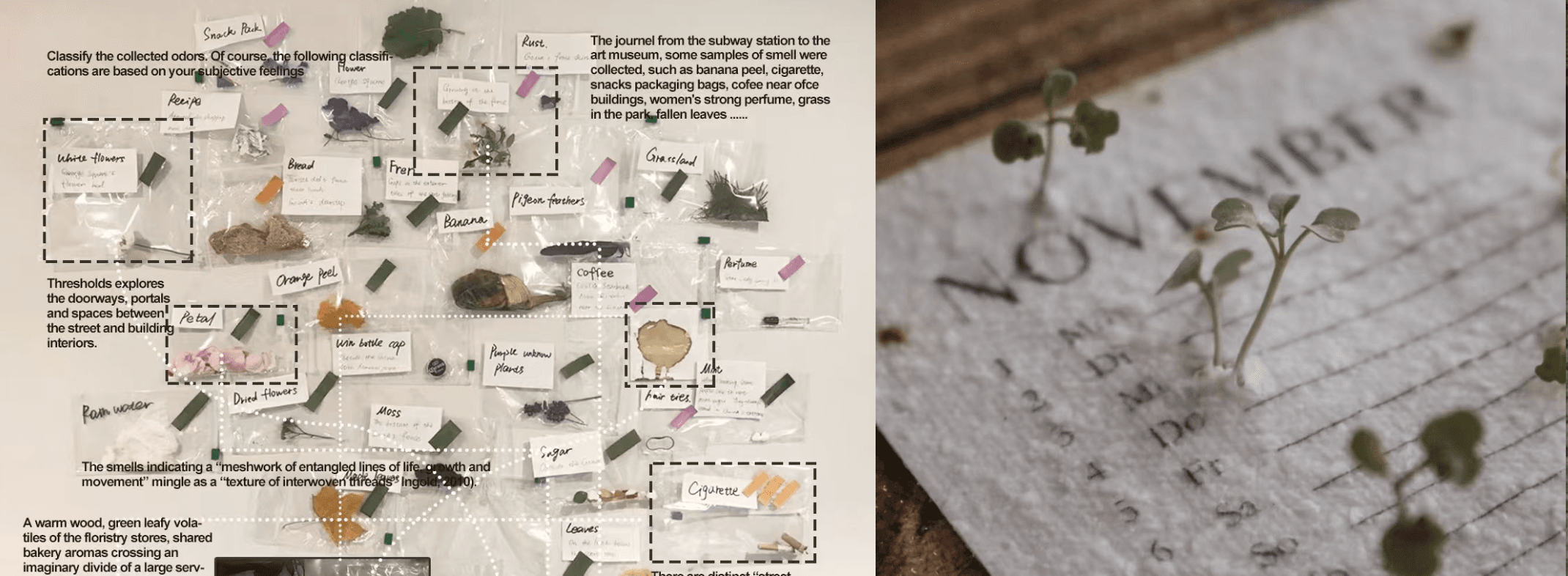
Public participation formed the heart of the project. We invited visitors to immerse themselves in the wetland, listen to the whispers of the wind through the leaves, feel the pulse of branches and soil, and collect small elements from nature, giving them new meaning. Rather than remaining passive observers, participants became co-creators, using their own hands to work alongside the wetland in producing a unique ecological artwork.
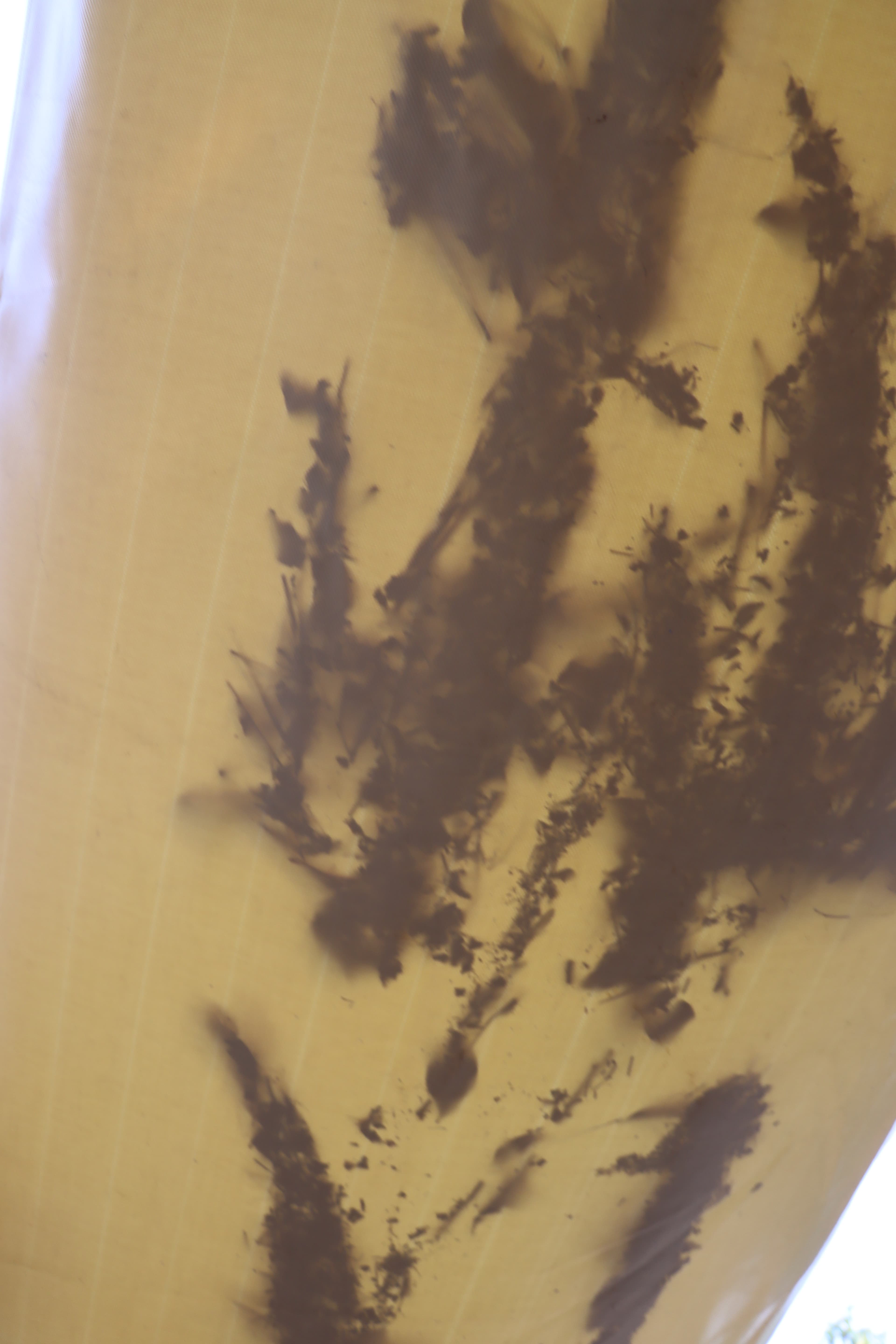
At the Haizhu Wetland Biennale, I was responsible for the philosophical research on the relationship between humans and nature for the public art project A Poem Sewn into Nature, as well as its field research, material experimentation, and the planning and facilitation of the public art workshops.
As part of my research, I studied the Tao Te Ching together with scholarly interpretations and commentaries. Through this process, I came to understand the deeper meaning of the idea that "Heaven and Earth are born together with me, and all things and I are one." Rather than viewing humans as separate from nature, this philosophy emphasizes a symbiotic relationship in which human beings should respect the laws of nature. Every form of life is the result of the universe's continuous evolution, and there are no absolute boundaries between living beings. Instead, we should approach the world with openness, recognizing and respecting the diverse forms and meanings of life. This quotation was ultimately stitched into the landscape as part of the artwork.
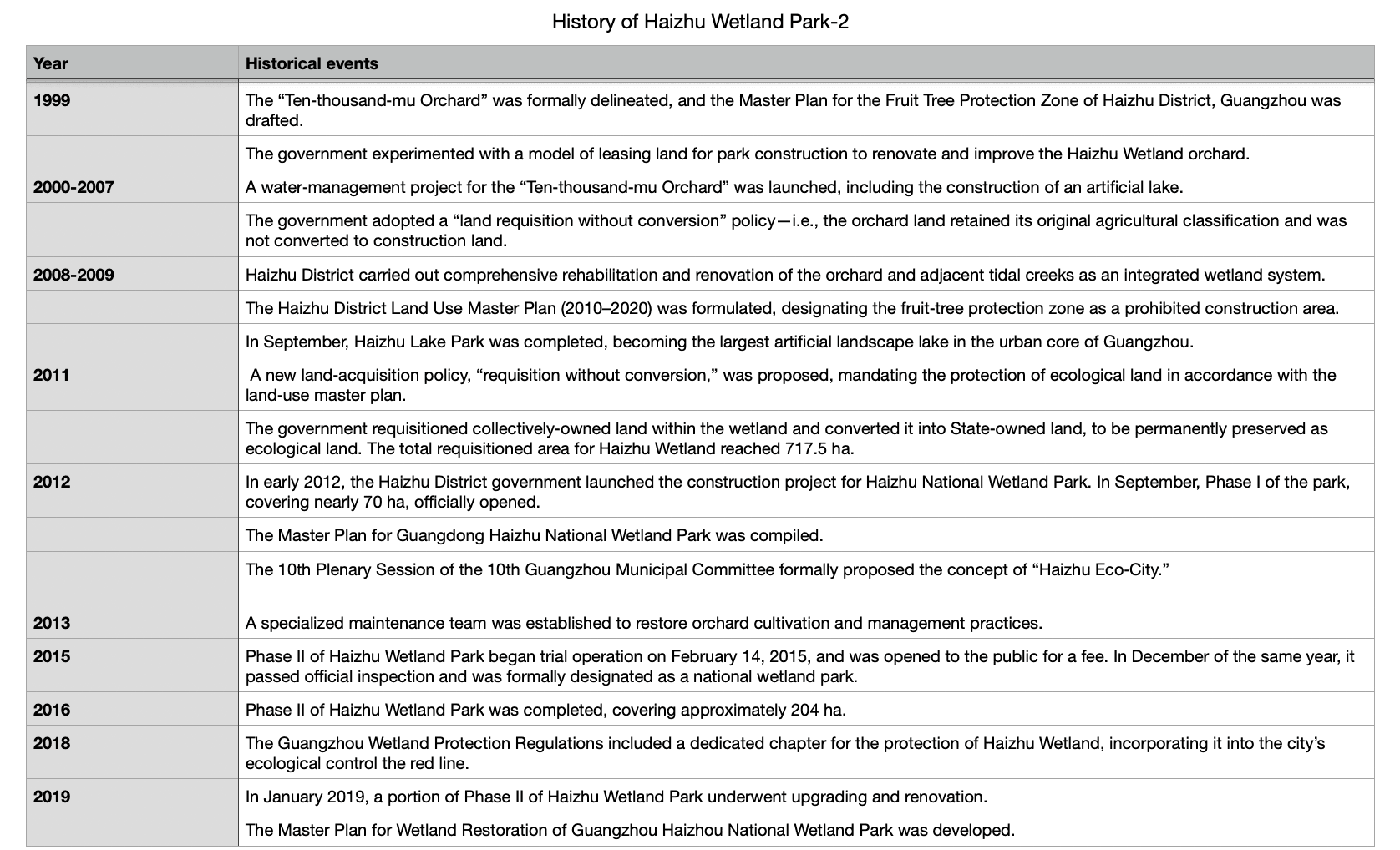
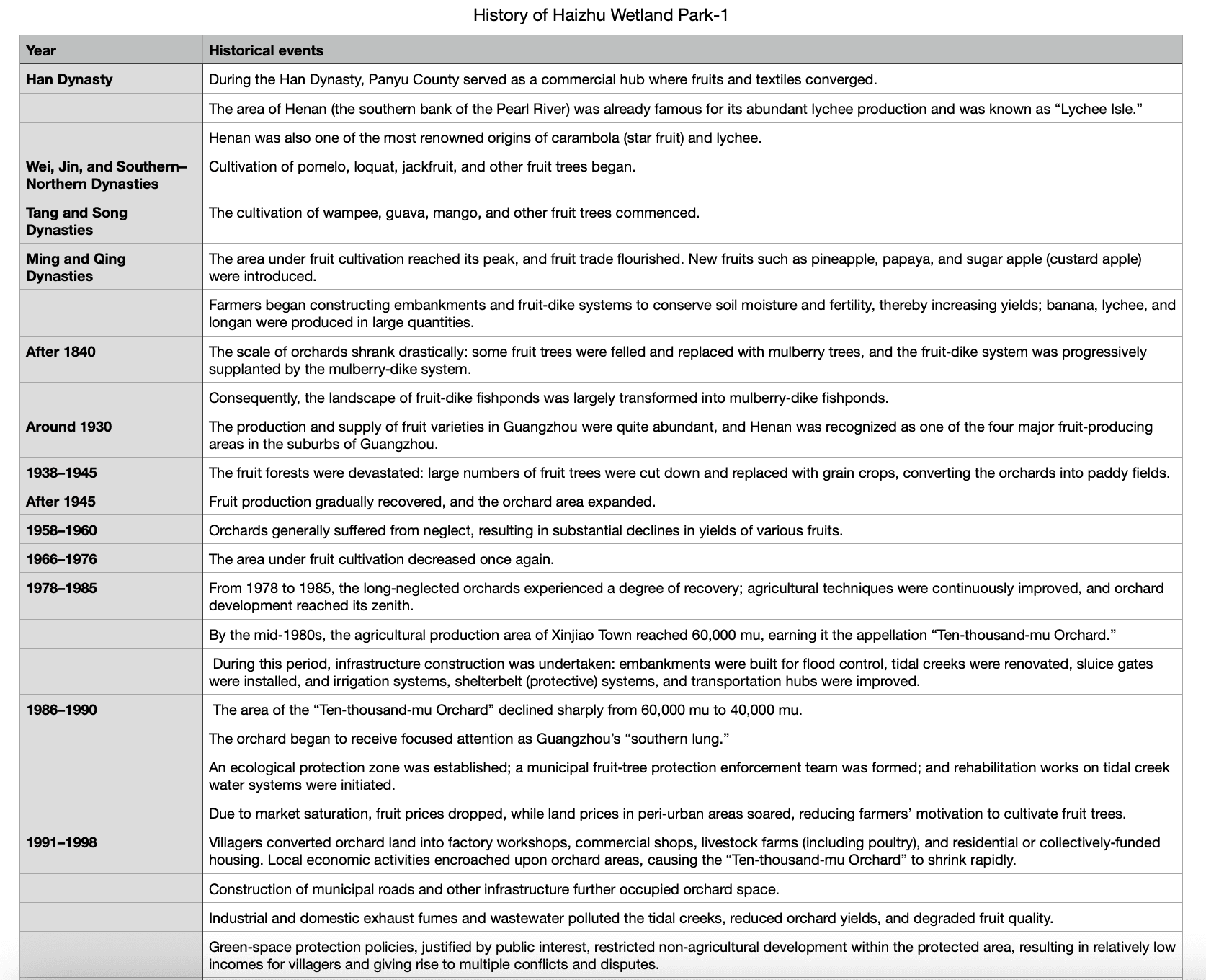
After discovering an orchard within Haizhu Wetland Park, I researched the history of fruit cultivation in the area over the past thousand years. Despite the introduction of non-native fruit species, the shrinking of orchards, advances in agricultural techniques, improvements to water infrastructure, industrial pollution, and later ecological conservation efforts, fifteen species of fruit trees have survived to the present day.
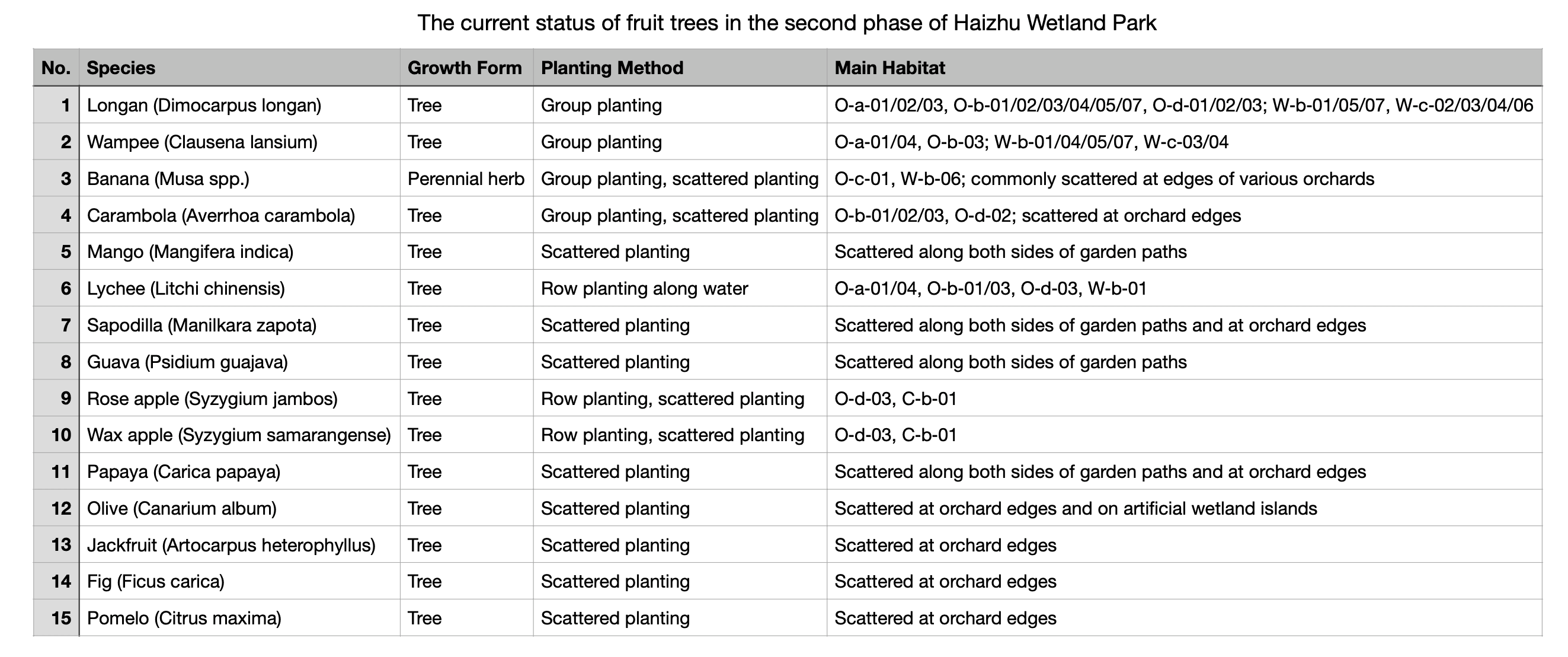
Based on this research, I proposed the concept of a Fruit Natural History. I sourced seed paper corresponding to each of the fifteen surviving fruit tree species. During the public art workshops, participants were invited to write their reflections on nature on the seed paper and stitch it into the landscape together with plants they had collected, creating a collective artwork that connected personal memory, ecological awareness, and the living environment.